History Lessons

Non Technical Talk in here
User avatar
scientist
moderator
moderator
Posts: 4599
Joined: Mon Aug 13, 2007 1:31 am

History Lessons

Post by scientist »

Every week I will post a car of Historic Significance...Since i'm a mitsu man i will start with something mitsubishi
http://www.youtube.com/watch?v=ahggc7c0SW0
Mr. Go Slow wrote:The Mitsubishi Galant GTO was launched in 1970 as the two-door hardtop variant of Mitsubishi's then-new Galant sedan, and was known as the Colt Galant GTO. Designed by Hiroaki Kamisago, who had previously been sent by Mitsubishi to study at the Art Center College of Design in Pasadena, California, it incorporated many stylistic cues from contemporary American muscle cars like the Mustang, Firebird and Cougar, including a long hood, raised cut-off ducktail rear, and rounded quad-headlamps and tail-lamps. It was also the first Japanese passenger car to have full side windows and a pillarless design.

There were three variants available at first, all powered by the Saturn engine: the M1 (1600 cc SOHC, 4-speed), M2 (1600 cc SOHC, 5-speed) and the top-spec MR (1600 cc twin-carb, DOHC 5-speed), a 125 horsepower (93 kW) version only available in Japan.

In 1972 Mitsubishi upgraded the powerplants with their new Astron units. The range now consisted of the LS (2000 cc single-carb, automatic transmission), GS (2000 cc twin-carb, 5-speed manual) and GS-R (2000 cc twin-carb, 5-speed manual). They were also given a mild facelift to distinguish them, comprising a one-piece slats-type grille and three-piece tail lights. Additionally, the 125 hp (93 kW) GS-R had wider 185-section tires, flared guards and a black-painted rear panel between the lights.

There was a second styling tweak in 1974 when the car gained a honeycomb-style front grille. Also, some of the very last cars gained the Astron 80 engine with Mitsubishi's Silent Shaft system, before the entire range was discontinued the following year in favour of the Lancer-based Celeste and the Galant Lambda/Sapporo.

After production ceased, the name lay dormant for fifteen years, but it retained sufficient cachet that Mitsubishi resurrected it for their flagship Mitsubishi GTO sports GT in 1990. However, in order to avoid offending automotive connoisseurs, who might have objected to the evocative nameplate from the highly regarded Ferrari 250 GTO and Pontiac GTO being used on a Japanese vehicle, it was renamed to Mitsubishi 3000GT overseas.

Image
Image

Image
Image

Image
Image

[IMG:672:448]http://img214.imageshack.us/img214/9302/three26.jpg[/img]
Image

Image
Image
/////////Ralliart

killab
Power Junkie
Power Junkie
Posts: 368
Joined: Sun Aug 26, 2007 2:45 pm

Re: History Lessons

Post by killab »

nice idea bro just make sure u touch all japanese automakers not just ur favorite.cool stuff :D

User avatar
TROJAN - X
Power Junkie
Power Junkie
Posts: 795
Joined: Mon Mar 17, 2008 2:27 pm

Re: History Lessons

Post by TROJAN - X »

SCI
that was real nice reading up on this
OH YEAH - sure feels like 10 to me.....

NF² ........ NO FACE - NO FEAR

TheGoodGuy
You can't stop posting can you
Posts: 1543
Joined: Fri Mar 14, 2008 11:24 am

Re: History Lessons

Post by TheGoodGuy »

Niyack!.. lol.. just playing. Good thread.
"Its not the size of the engine that matters... its how much shit you can bolt to it....."
Image

User avatar
scientist
moderator
moderator
Posts: 4599
Joined: Mon Aug 13, 2007 1:31 am

Re: History Lessons

Post by scientist »

http://www.youtube.com/watch?v=QOZQRy8DwgQ
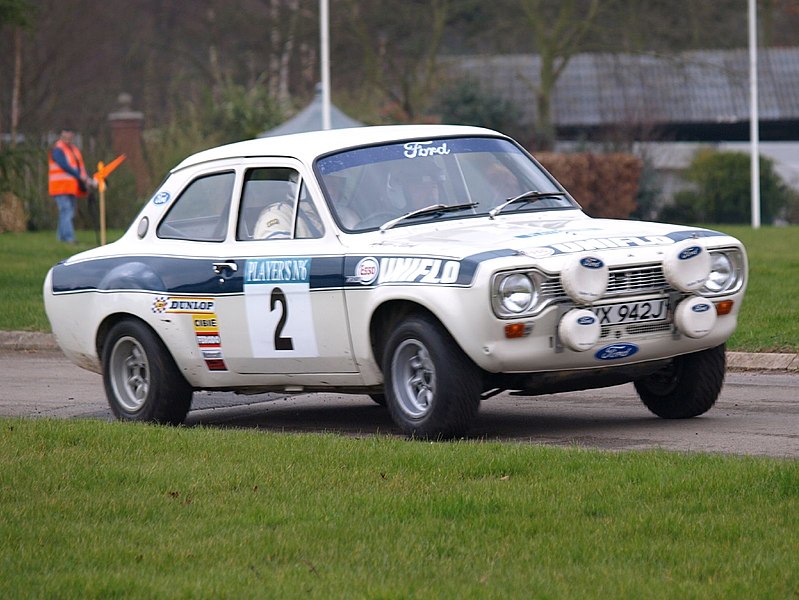
Ford Escort Mark I (1968–1975)
The original Ford Escort was introduced in the United Kingdom at the end of 1967. It replaced the successful long running Anglia. The car was presented in continental Europe as a product of Ford's European operation. Escort production commenced at Halewood in England during the closing months of 1967, and for left hand drive markets at the Ford plant in Genk[1]. At the beginning of 1970 continental European production transferred to a new plant on the edge of Saarlouis, West Germany.

The Escort had conventional rear wheel drive and a four-speed manual gearbox, or 3 speed automatic transmission. The suspension consisted of a simple live axle mounted on leaf springs, but with rack-and-pinion steering. The Mark I featured contemporary styling cues in tune with its time: a subtle Detroit-inspired "Coke bottle" waistline and the "dogbone" shaped front grille — arguably the car's most famous stylistic feature. Similar styling featured in the larger Cortina Mark III (also built in West Germany as the Taunus) that was launched in 1970.

Initially, the Escort was sold as a 2-door saloon (with circular front headlights) and rubber flooring on the "De Luxe" model. The "Super" model featured rectangular headlamps, carpets, a cigar lighter and a water temperature gauge. A 3-door estate was introduced in March 1968 and a panel van in April 1968. The 4-door saloon appeared in 1969.

Underneath the bonnet was the Kent Crossflow engine. Diesel engines on small family cars were very rare, so the Escort featured initially only petrol engines — in 1.1 L, and 1.3 L versions. A 950 cc engine was also available in some export markets, but few were ever sold.

There was a 1300GT performance version, with a tuned 1.3 L Kent (ohv) engine sporting a Weber carburetor and uprated suspension. This version also featured additional instrumentation with a rev counter, battery charge indicator and oil pressure gauge. The same tuned 1.3 L engine was also used in a variation sold as the Escort Sport that used the flared front wings from the AVO range of cars but featured trim from the more basic models. Later on a further "executive" version of the Escort was produced known as the 1300E. This featured the same 13" road wheels and flared wings of the Sport but was trimmed in an upmarket, for that time, fashion with wood trim on the dashboard and door cappings.

There was, in the early days of the Escort, a higher performance for rallies and racing — the Escort Twin Cam, which featured an engine with a Lotus made 8-valve twin camshaft head fitted to the 1.5 L non-crossflow block which had a bigger bore than usual to give a capacity of 1558 cc. Production of the Twin Cam, which was originally produced at Halewood, was phased out as the RS1600 was developed.

The Mark I Escorts became very successful as a rally car, and they eventually went on to become one of the most successful rally cars of all time.[2] The Ford works team was practically unbeatable in the late 1960s / early 1970s, and arguably the Escort's greatest victory was in the 1970 London to Mexico World Cup Rally being driven by Finnish legend Hannu Mikkola. This gave rise to the famous Escort Mexico (1.6 L "Kent" engined) special edition road versions in honour of the rally car.

In addition to the Mexico, the RS1600 was developed which used a Kent engine block with a 16-valve Cosworth cylinder head. This engine was essentially a detuned Formula 3 engine designated BDA, for Belt Drive A Series. Both the Mexico and RS1600 were built at Ford's Advanced Vehicle Operations (AVO) facility located at the Aveley Plant in South Essex. As well as higher performance engines and sports suspension, these models featured strengthened bodyshells making them an ideal model for rallying. Even today Mark I Escorts are still popular in the amateur rally scene. The BDA engine has a distinctive growling which can be heard for quite a distance when the vehicle is being driven hard, such as in competition.[citation needed]

Ford also produced an RS2000 model as a more "civilised" alternative to the somewhat temperamental RS1600 featuring a 2.0 L Pinto (ohc) engine. This also clocked up some rally and racing victories; and pre-empted the hot hatch market as a desirable but affordable performance road car. Like the Mexico and RS1600 this car was produced at the Aveley plant.

The Escort quickly became one of Britain's most popular cars, comfortably outselling the conceptually similar Vauxhall Viva HB launched two years earlier. It was also a success on export markets, though in the larger European markets it tended to be outsold by the Opel Kadett, its General Motors rival. The car was built in Germany, Britain and in Commonwealth countries such as Australia and New Zealand.
Source: Wikipedia
Image
Image
Image
Image
/////////Ralliart

User avatar
manjidrift
Power Junkie
Power Junkie
Posts: 248
Joined: Tue Dec 26, 2006 2:10 pm

Re: History Lessons

Post by manjidrift »

Mind if I add something?

.....

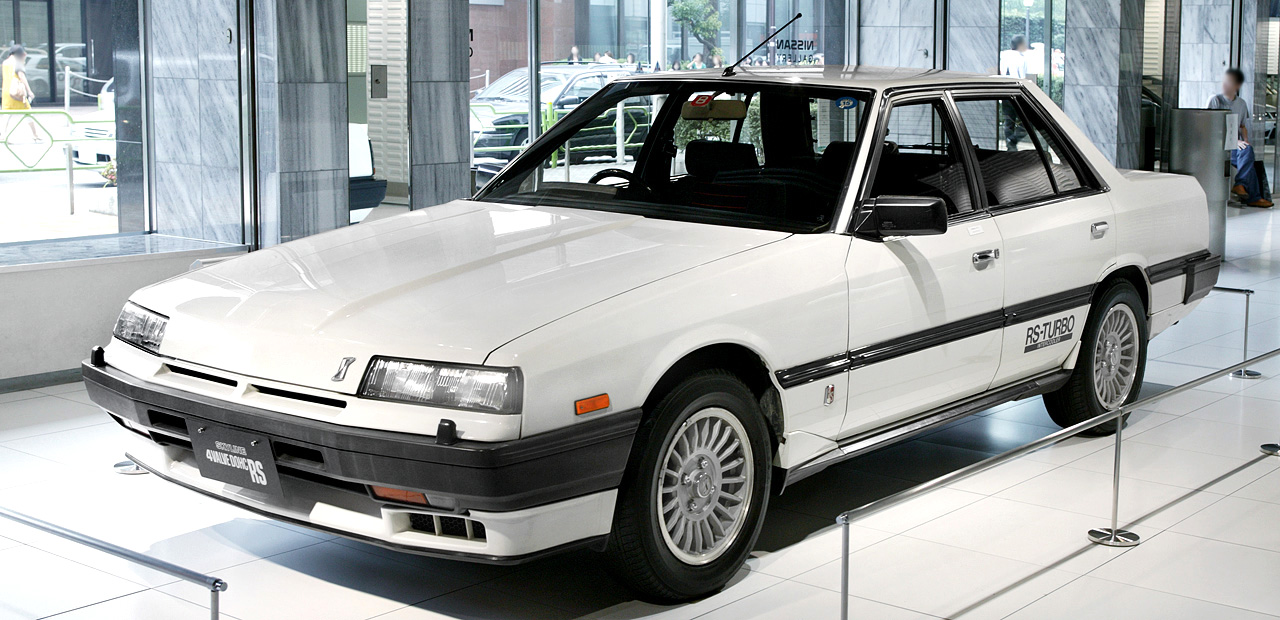
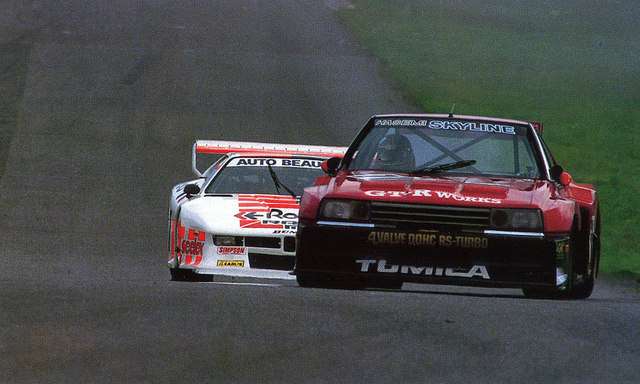
(K)DR30 Nissan Skyline RS-X Turbo

Image

http://www15.plala.or.jp/GT4/photo1/TurboC/index1.htm

Nissan Motors Corporation introduced the new R-Chassis in 1981 after retiring the C-chassis which was used as the Skyline's frame since 1967.

The R30 Skyline came with a myriad of innovations. It was the second generation of Skyline to have an optional turbocharger and the all new DOHC 16-Valve FJ20E and FJ20ET motors.

(The FJ20ET was also used in the S110 Silvia 240RS Group B rally car)

The R30 had also signified Nissan's return to the JGTC after dropping out from the series in 1973 due to the oil crisis.

(At that time Nissan had revealed the C110 Skyline GT-R JGTC car. It was never further developed and only one example remains in Nissan's historical warehouse in Zama)

Image

The R30 had moderate success in the ATCC and was driven by one or two privateers in the BTCC.

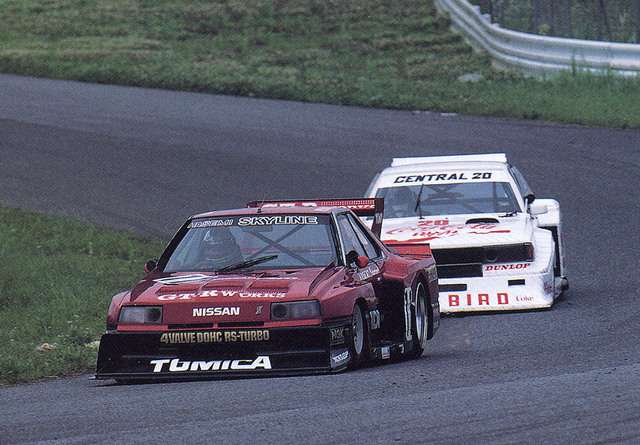
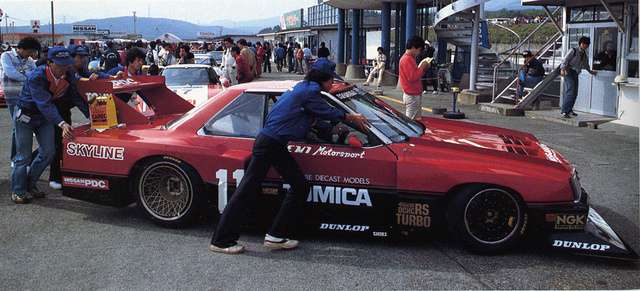
The R30 which was entered into the Group 7 or Super Silhouette class of the JGTC featured a tube chassis and highly modifed version the R30s body; engineered for extreme downforce.

Image

Image

Image

Image

Image

Image

http://www.youtube.com/watch?v=LfWW1rcpGok

It was raced along side Nissan's own S12 Silvia, Bluebirds and March Super Silohuette cars.

In 1993 the R30 was updated an given an increase as well as performance. The new facia was dubbed Tekkamen (鉄仮面 or テッカメン) in the tradition of giving each generation of Skyline a namesake.

Output was increased to 140kw and 250N.m of torque.


Paul Newman who raced under Nissan in a Z31 FairladyZX/300ZX and featured in all of the R30s commercials; was given a signature version of the car. The 'Paul Newman Edition Skyline' which featured the pearl white paint from the 200ZR and the actors signature.

Image

The DR30 RS-X was also featured in seasons 2 and 3 of the action series Seibu Keisatsu (西部警察 or Western Police) It was another showing of Nissan's close relationship with the show by providing a new set of specially modified cars for the new series.

Image

The DR30 designated Super Machine RS replaced the previous Super Machine X; a C210 Skyline GT-X.

http://www.youtube.com/watch?v=xp0WJfPAX0E

西部警察PARTⅢ 第16話【大門軍団フォーメーション】の走行画像

Sources:
Wikipedia
SKYLINEの歴史
ザ・ヒストリー・オブ・スカイライン THE HISTORY OF SKYLINE

TheGoodGuy
You can't stop posting can you
Posts: 1543
Joined: Fri Mar 14, 2008 11:24 am

Re: History Lessons

Post by TheGoodGuy »

"Its not the size of the engine that matters... its how much shit you can bolt to it....."
Image

Post Reply